
How to Fade Pigmentation and Dark Spots: An Expert's Ingredient Guide
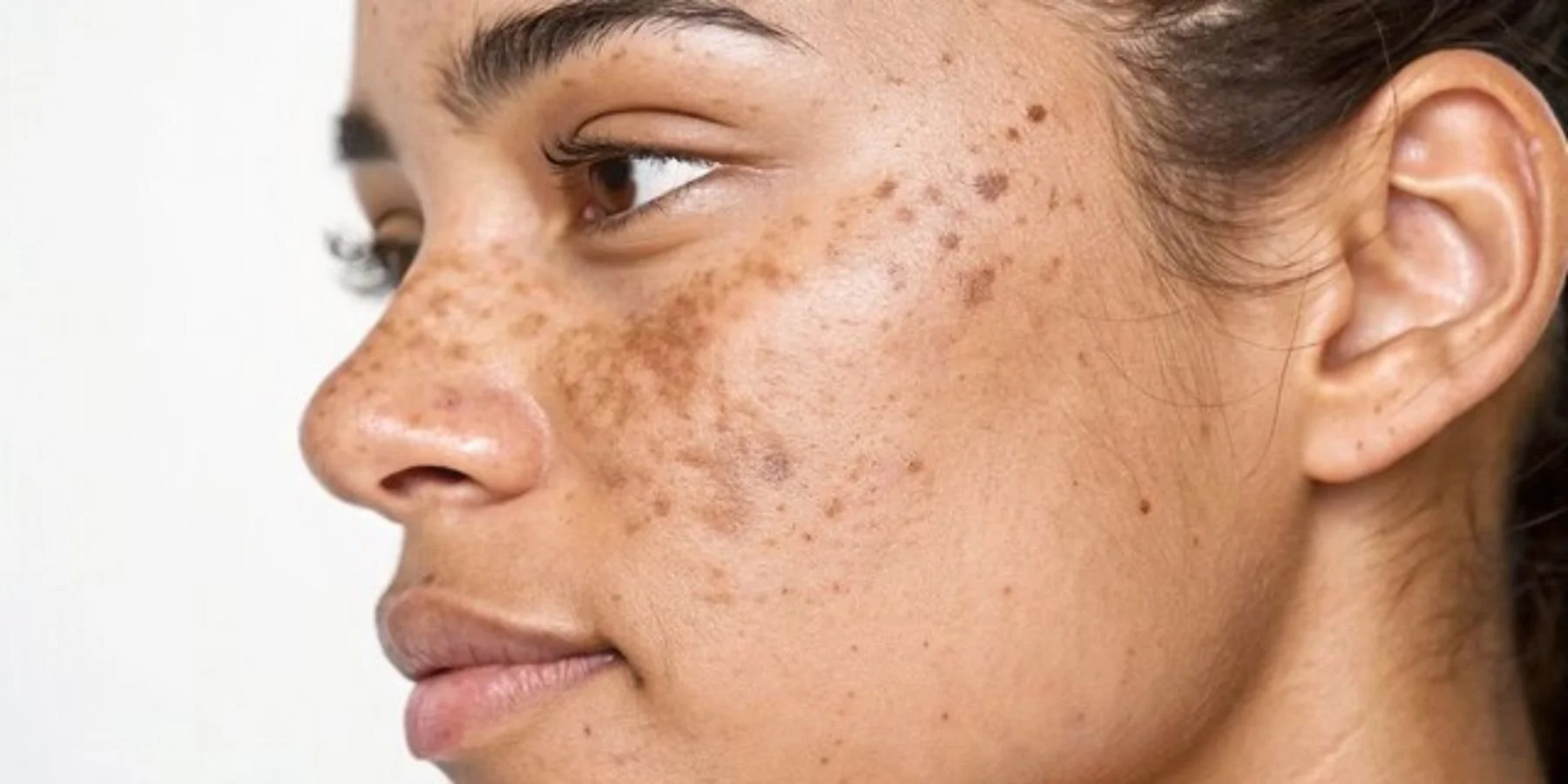
If you're trying to fade hyperpigmentation, dark spots or uneven skin tone, you've probably come across hundreds of skincare products promising brighter, clearer and more even-looking skin.
But how do you know which ingredients are actually worth your attention?
More importantly, are you choosing ingredients that address the root cause of excess pigmentation, or are you simply trying to fade what's already visible on the surface?
Not all pigmentation ingredients work in the same way! That's what makes it so hard to choose the right ingredients to deliver the results you want.
Some ingredients help to quieten the signals that tell your skin to produce more melanin. Others inhibit the enzymes responsible for melanin production, while some help prevent pigment from transferring to surrounding skin cells.
Then there are ingredients that encourage skin renewal, gradually improving the appearance of pigmentation that's already visible.
Understanding these differences matters because the best approach isn't necessarily finding one miracle ingredient. It's about knowing which ingredients to use, why you're using them and how they can work together.
In my previous blog, Hyperpigmentation 101: What Causes It and How to Treat Uneven Skin Tone, I explained the science behind pigmentation, what triggers excess melanin production and why prevention is so important.
So, instead of repeating all of that, we're going straight into the ingredients!
I'll be sharing the ingredients I think are worthy of your attention, explaining how they work within the skin, what the research tells us and which ones I would look for when choosing a pigmentation serum.
Why Do Some Ingredients Work Better for Hyperpigmentation Than Others?
When you see a skincare product described as brightening, pigmentation-correcting or dark-spot reducing, it doesn't necessarily mean it's working in the same way as another product making exactly the same claims.
This is where understanding the science can help you make better decisions about your skincare.
The pigmentation process has several stages that ingredients can target.
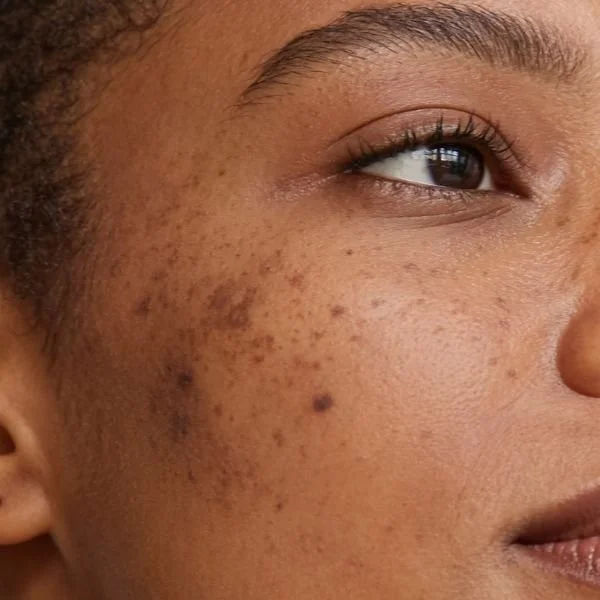
1. Reducing the signals that stimulate melanin production: Quietening the messages
Before melanocytes increase pigment production, surrounding skin cells can signal them, particularly after UV exposure or inflammation. Certain ingredients, such as tranexamic acid, can help interfere with these signals, reducing the stimulation of excess melanin production.
2. Inhibiting tyrosinase activity: Slowing down the pigment factory
Once a melanocyte is stimulated, it uses an enzyme called tyrosinase to manufacture melanin. Ingredients such as alpha arbutin and hexylresorcinol can inhibit this enzyme, helping reduce pigment production.
3. Reducing Pigment Transfer: Stopping Pigment From Reaching Surrounding Skin Cells
Once melanin is produced, it's stored in tiny structures called melanosomes that mature within the melanocyte.
These mature melanosomes then travel along the melanocyte's dendrites, small, arm-like extensions that reach toward surrounding skin cells called keratinocytes.
The melanosomes are then transferred into these surrounding cells, where the pigment contributes to the colour we see on the skin's surface.
4. Encouraging skin renewal
Ingredients such as retinoids and exfoliating acids can help improve the appearance of existing pigmentation as pigmented surface cells are gradually shed.
You could be using a brilliant ingredient that helps inhibit melanin production, but that doesn't necessarily mean it's going to help fade pigmentation that's already sitting within the skin.
This is why I often prefer a multi-targeted approach, choosing ingredients that work at different stages rather than relying on one ingredient to do everything.
Which Ingredients Target the Different Stages of Pigmentation?
1. Quietening the Messages: Reducing the Signals That Trigger Pigmentation
These ingredients help influence the signals that encourage melanocytes to produce more melanin.
Ingredients: One of the most talked-about ingredients is Tranexamic Acid, along with azelaic acid, which works through its anti-inflammatory actions.
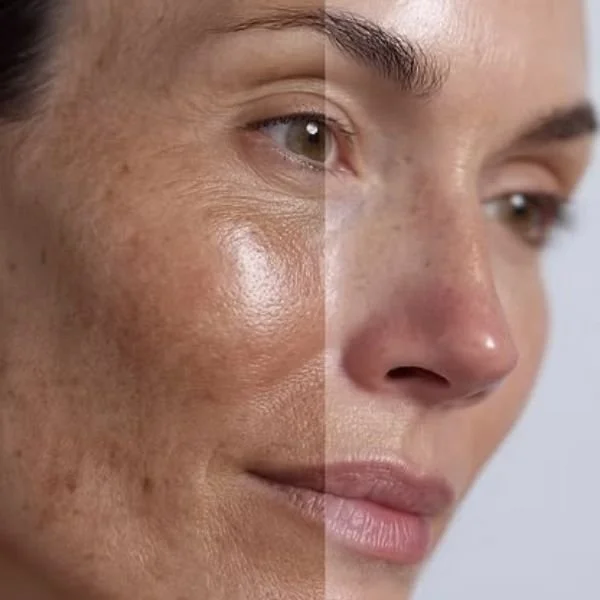
2. Slowing Down the Pigment Factory: Inhibiting Melanin Production
These ingredients interfere with tyrosinase activity or other processes involved in manufacturing melanin.
Ingredients: Alpha Abutin, Azelaic Acid, Hexylresorcinol, Thiamidol, Kojic Acid and certain forms of Vitamin C.
3. Interrupting Pigment Delivery: Reducing Melanosome Transfer
Once melanosomes mature, they travel along the melanocyte's dendrites and transfer into surrounding keratinocytes.
Ingredient: Niacinamide
4. Helping to Fade Existing Pigmentation: Encouraging Skin Renewal
These ingredients help improve the appearance of existing pigmentation as pigmented epidermal cells are gradually replaced.
Ingredients: Retinoids, Mandelic Acid, Lactic Acid, Glycolic acid and other appropriate exfoliating acids.
5. Protecting Against Further Pigmentation: Antioxidants and Anti-inflammatory Ingredients
These ingredients help address oxidative stress and inflammation that can contribute to pigmentation.
Ingredients: Vitamin C, Niacinamide, Azelaic Acid and selected botanical antioxidants.
The Best Ingredients for Hyperpigmentation and Dark Spots: Meet the Main Characters
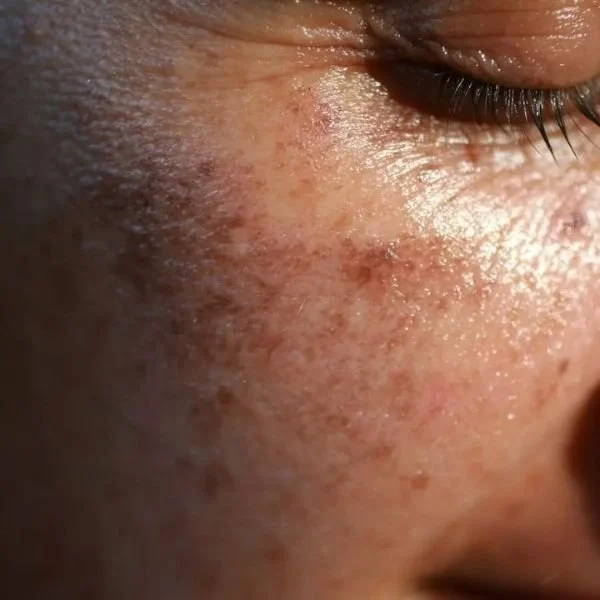
Tranexamic Acid
Tranexamic acid is one of the ingredients I think is particularly interesting for tackling stubborn pigmentation, especially melasma and the dark marks left behind after breakouts.
Rather than directly slowing the enzyme that produces melanin, tranexamic acid helps quiet some of the signals that tell your pigment-producing cells to make more melanin in the first place. This matters because even when you protect your skin from UV exposure, other factors such as hormones and inflammation can still influence pigment production.
By interrupting some of these signals, tranexamic acid can reduce excess melanin production and gradually improve the appearance of dark spots and uneven skin tone.
It doesn't increase the skin's sensitivity to sunlight and is generally well tolerated, though irritation is still possible, as with any skincare ingredient.
Don't be fooled into thinking that a serum containing only tranexamic acid will necessarily get rid of your hyperpigmentation! Tranexamic Acid is a brilliant ingredient to consider, but pigmentation is complex, and one ingredient isn't always enough to tackle all the different processes involved.
I like to think of tranexamic acid as the main character, but it needs a good supporting cast! That's why I prefer seeing it alongside complementary ingredients such as niacinamide, alpha arbutin or azelaic acid, which can help target other stages of the pigmentation process.
Azelaic Acid:
One of Azelaic Acid’s strengths is that it works in two ways. It inhibits tyrosinase, the enzyme involved in melanin production, while also offering anti-inflammatory benefits.
That combination is particularly useful for post-inflammatory hyperpigmentation (PIH), where inflammation triggers the skin to produce excess pigment.
If your breakouts leave dark marks long after the spots disappear, azelaic acid is an ingredient worth knowing about! So instead of focusing only on fading the dark marks left behind, azelaic acid can also help address the inflammation that contributes to the problem.
But it's not just an ingredient for breakout-prone skin! Clinical evidence also supports azelaic acid for treating melasma.
You'll often find azelaic acid at 10% in cosmetic skincare, while 15–20% formulations are available by prescription.
And although it's generally well tolerated, don't assume it can't cause irritation! Tingling, dryness and sensitivity can occur, particularly when first introducing it into your routine.
Azelaic acid is particularly useful when pigmentation and inflammation go hand in hand because it helps tackle both, rather than focusing on melanin production alone.
Hexylresorcinol
Hexylresorcinol is another ingredient I think deserves more attention for tackling hyperpigmentation, particularly sun spots and uneven skin tone.
It's a synthetic resorcinol derivative that inhibits tyrosinase, a key enzyme responsible for producing melanin. By slowing this enzyme's activity, hexylresorcinol helps reduce excess pigment production. The less excess pigment your skin produces, the more opportunity existing dark spots have to gradually fade as your skin naturally renews itself.
In one clinical study, researchers compared 1% hexylresorcinol with 2% hydroquinone, a well-established prescription pigmentation treatment. After 12 weeks, both ingredients had significantly improved pigmentation, with no statistically significant difference between the results in this relatively small study.
There's also research looking at hexylresorcinol combined with niacinamide, with improvements reported in pigmentation, uneven skin tone and the appearance of fine lines and wrinkles.
And this is a great example of why combining ingredients can be so beneficial! Hexylresorcinol helps slow melanin production, while niacinamide helps reduce pigment transfer to surrounding skin cells.
For me, hexylresorcinol is worth looking for in a well-formulated pigmentation serum, especially when paired with other ingredients that complement its action.
Alpha Arbutin
Alpha arbutin is an interesting ingredient for tackling hyperpigmentation because it helps reduce excess melanin production at the source. It works by inhibiting tyrosinase, a key enzyme melanocytes use to produce melanin. By reducing the activity of this enzyme, alpha arbutin can help slow down the formation of excess pigment in response to triggers such as UV exposure, inflammation and hormonal changes.
You may also see alpha arbutin encapsulated in skincare formulations, which can improve its stability and allow for more controlled release. Depending on the delivery system, this may also improve how the ingredient reaches the skin and how well it's tolerated.
What I particularly like about alpha arbutin is its potential to help limit excess pigmentation from developing while gradually improving the appearance of existing dark spots. And remember, as it produces less excess pigment, existing pigmentation may gradually become less noticeable as the skin naturally renews itself.
However, keep expectations realistic! Alpha arbutin generally works better for gradually improving mild, superficial pigmentation than for dramatically fading deep, stubborn pigmentation on its own.
Vitamin C
Vitamin C is probably one of the most talked-about ingredients for brightening skin and tackling hyperpigmentation, but I think its ability to fade pigmentation is massively oversold!
Don't get me wrong: vitamin C is a brilliant antioxidant that neutralizes free radicals generated by UV exposure and environmental stress, reducing oxidative damage that can contribute to excess pigmentation.
Certain forms of vitamin C, particularly L-ascorbic acid, can also interfere with melanin-production reactions, including tyrosinase-related processes, helping gradually improve uneven skin tone.
I personally wouldn't rely on vitamin C alone to tackle stubborn pigmentation or melasma. While it can support a brighter, more even-looking complexion, I think its real strength is as part of a multi-targeted approach, working alongside ingredients that more specifically target excess melanin production or pigment transfer.
Vitamin C absolutely has a place in a pigmentation routine, but it's not the miracle dark-spot corrector it's sometimes made out to be!
The Supporting Cast: Other Pigmentation Ingredients Worth Knowing About
There are several more ingredients I think deserve a place in this guide.
Kojic acid is another tyrosinase inhibitor with clinical research supporting its use for pigmentation, particularly in combination formulas. However, it can cause irritation for some people.
Cysteamine is particularly interesting because it has clinical evidence for melasma. It works through several proposed pigment-modulating mechanisms, although its smell, tolerability and application requirements can make it less appealing to some users.
Mulberry extract contains compounds with potential pigment-inhibiting properties, including oxyresveratrol. However, a finished skincare product's effectiveness depends on the specific extract.
Turmeric extract contains compounds such as curcumin that have shown antioxidant, anti-inflammatory and potential pigment-regulating activity in experimental research. But we need more robust human clinical evidence before treating it as equivalent to established pigmentation treatments.
Bakuchiol is another ingredient that interests me, particularly because of its potential effects on photoageing and uneven pigmentation. However, I wouldn't classify it as a direct replacement for prescription retinoids, and evidence on pigmentation is still relatively limited.
Why Combining Skincare Ingredients Can Help Fade Hyperpigmentation
One of the biggest challenges when treating hyperpigmentation is that we're not dealing with just one trigger or one process within the skin. There are multiple pathways involved!
We know that external factors such as UV exposure, heat and oxidative stress can contribute to hyperpigmentation, but we also have internal influences, including hormonal changes, pregnancy, certain medications and inflammation. And this is something I think is really important to understand.
Applying sunscreen doesn't simply switch off excess melanin production!
Sunscreen is essential because it protects the skin from UV exposure, one of the major triggers of pigmentation. But UV exposure is only one part of a much more complicated process.
The signalling pathways involved in pigmentation can remain active, particularly when we're dealing with conditions such as melasma, where hormonal influences and other factors can contribute to ongoing pigment production.
This means that while we're trying to fade the hyperpigmentation that's already visible, our melanocytes may still be receiving signals encouraging them to produce more pigment.
And this is exactly why I prefer a multi-targeted approach!
Rather than relying on one ingredient to do everything, we want to tackle pigmentation at different stages.
Firstly, we need to reduce the triggers and signals that encourage excess melanin production. This is where daily sun protection is non-negotiable. Without consistent sunscreen use, you're making it considerably harder to prevent new pigmentation and improve existing dark spots.
Secondly, we want to slow down the pigment factory itself, using ingredients that help inhibit the enzymes involved in excess melanin production.
Thirdly, we can look at reducing pigment transfer, helping to limit the movement of melanosomes into surrounding skin cells.
And finally, we want to improve the appearance of pigmentation that's already visible, supporting skin renewal and the gradual fading of pigmented surface cells.
The aim isn't to stop the skin from producing melanin altogether, because melanin has an important protective role.
It's about reducing excessive pigment production while helping to improve the pigmentation that's already developed.
Your Hyperpigmentation Skincare Routine: Here's Your Checklist!
Now that we've explored the different ingredients and how they work in the skin, how do you know whether your skincare routine targets the different stages of pigmentation?
For me, it's not about finding one miracle serum or buying lots of individual ingredients to layer together. It's about looking at your skincare routine as a whole and understanding what your products are already doing for your skin.
Use daily broad-spectrum sunscreen to protect against UV-induced pigmentation and prevent existing dark spots from darkening. Ideally SPF50 with strong UVA protection. If you're prone to melasma or stubborn hyperpigmentation, consider a tinted sunscreen containing iron oxides to provide additional protection against visible light.
Ingredients that help quieten the messages encouraging excess melanin production, such as Tranexamic Acid.
Ingredients that slow down the pigment factory by inhibiting tyrosinase activity, such as Alpha Arbutin or Hexylresorcinol.
Ingredients that help reduce pigment transfer into surrounding skin cells, such as Niacinamide.
Ingredients that support skin renewal, helping to gradually improve the appearance of existing pigmentation. You might already be using a retinoid in the evening or an exfoliating acid elsewhere in your routine, so there's no need to double up!
Antioxidants and anti-inflammatory ingredients that help protect against oxidative stress and reduce inflammation that can contribute to further discolouration. Vitamin C is a brilliant antioxidant, while azelaic acid is particularly interesting because it also helps regulate excess melanin production.
Now, this doesn't mean you need a separate product for every stage of pigmentation or that your routine must tick every single box!
A well-formulated pigmentation serum may already contain several complementary ingredients.
And please don't underestimate the importance of your skin barrier!
Introducing too many strong active ingredients, particularly exfoliating acids and retinoids, can lead to irritation and inflammation, which may actually make pigmentation worse, especially if you're prone to post-inflammatory hyperpigmentation.
For me, the goal isn't to have the longest skincare routine or the highest concentration of every active ingredient.
It's about understanding what your skin needs, choosing well-formulated products that complement one another and being consistent with your routine.
Thanks for Reading
I hope you enjoy the skincare routine I have put together, and you have found this review helpful! As a small independent business, using these links helps me keep my website running and continue to provide these blogs for you. I’m often asked how you can thank me for my skincare advice - using these links is very much appreciated. Thank you for being part of this amazing journey with me!
Links may be affiliated links which means that if you make a purchase though one of our links we receive a small commission which helps support and run this website.