
Perimenopause and Menopause Skin Changes: 8 Signs and Why They Happen
After more than 30 years of working with and treating skin, there's one thing I've noticed that continues to catch so many women by surprise, just how much their skin can change during perimenopause and menopause!
One minute, you feel like you've finally got your skincare routine right. You know what your skin likes, which ingredients work for you and which products you can rely on.
Then suddenly, something changes. Your moisturiser doesn't seem to be doing enough. Your skin feels drier, but at the same time, it doesn't seem to like everything you're putting on it! Perhaps it's become more sensitive or uncomfortable, you're experiencing breakouts for the first time in years, your pigmentation seems more noticeable or your skin simply doesn't have the same bounce it once did.
Welcome to the world of hormonal skin changes!
Before we start talking about what to put on our skin, I want to help you understand what's actually happening beneath the surface, how your hormones influence the skin and why these changes occur.
Because the more you understand your skin, the better equipped you are to recognise what it actually needs.
The 8 Skin Changes You May Notice During Perimenopause and Menopause
Hormonal changes can affect how our skin looks, feels and functions, but not everyone experiences the same changes.
Some are closely linked to declining oestrogen, while others are influenced by ageing, genetics, UV exposure and other factors.
Here are eight changes worth understanding.
1. Loss of Firmness and Collagen
Collagen provides strength, structure and support to our skin. I often liken our skin to a mattress, with collagen acting like the foam that helps maintain its shape and firmness.
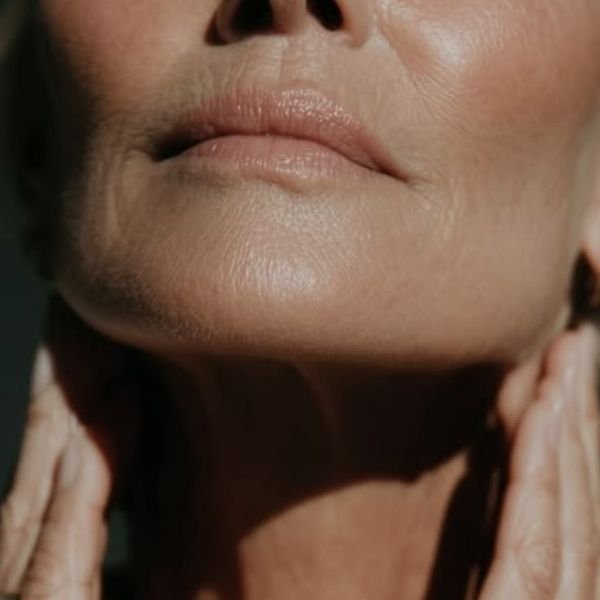
We naturally lose collagen as we age, but declining oestrogen around menopause can accelerate this process. Research suggests skin collagen may decrease by as much as 30% during the first five years following menopause, with estimates of approximately 2% per year thereafter.
But it's not simply about how much collagen we produce. It's also about how much we break down!
Our skin constantly produces and breaks down collagen as part of normal tissue renewal. Enzymes called matrix metalloproteinases (MMPs) help break down components of the skin's supporting structure.
I liken MMPs to a scissor-happy hairdresser! They're necessary for normal tissue remodelling, but when collagen breakdown exceeds production, it's a little like asking for a trim and losing more hair than you wanted!
Oestrogen helps regulate this balance and influences fibroblasts, the cells responsible for producing collagen, particularly types I and III within the dermis.
As oestrogen declines, collagen production and breakdown can become less balanced, contributing to a gradual loss of firmness and resilience.
So what might you notice?
Skin feels less firm or bouncy.
Fine lines and wrinkles become more noticeable.
Skin appears thinner or less resilient.
Reduced elasticity.
Skin looks or feels more lax, particularly around the lower face and jawline.
Remember, changes in facial contours also involve deeper structures, including facial fat and bone, not collagen loss alone.
2. Dryness and Dehydration
This is one of the changes I hear about most frequently. Women who have never considered their skin dry suddenly find themselves reaching for richer moisturisers.
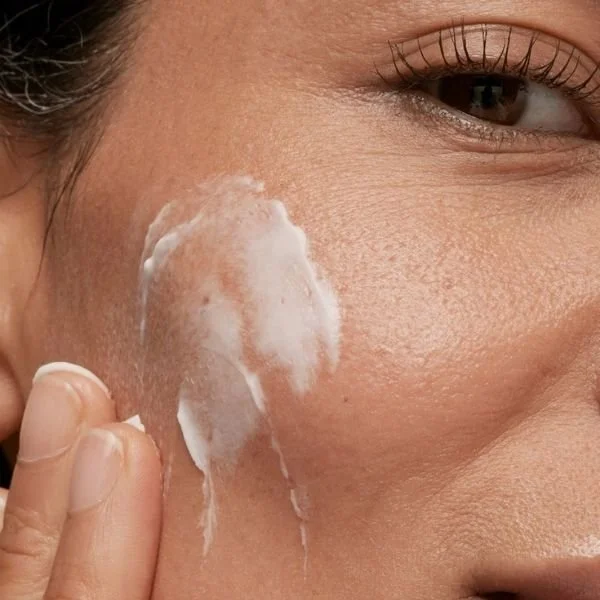
Their skin may feel tight, uncomfortable or simply not as hydrated as it once did. Remember dry skin and dehydrated skin are not the same thing!
Dry skin is generally associated with insufficient skin lipids, while dehydrated skin is lacking water. And yes, your skin can experience both at the same time.
As oestrogen levels decline, changes in skin lipids, hydration and barrier function can contribute to increased dryness and a feeling of tightness.
Oestrogen also influences processes involved in maintaining the skin's water-binding components, including glycosaminoglycans such as hyaluronic acid.
Changes in these processes may affect how well our skin maintains hydration.
You might notice:
Your usual moisturiser no longer feels sufficient.
Your skin feels tight, particularly after cleansing.
Fine dehydration lines become more noticeable.
Your makeup settles into fine lines or doesn't sit as smoothly.
Your skin feels uncomfortable even though you may still produce oil.
3. Changes to Your Skin Barrier
You've probably heard me describe the outermost layer of your skin, the stratum corneum, as a brick wall.
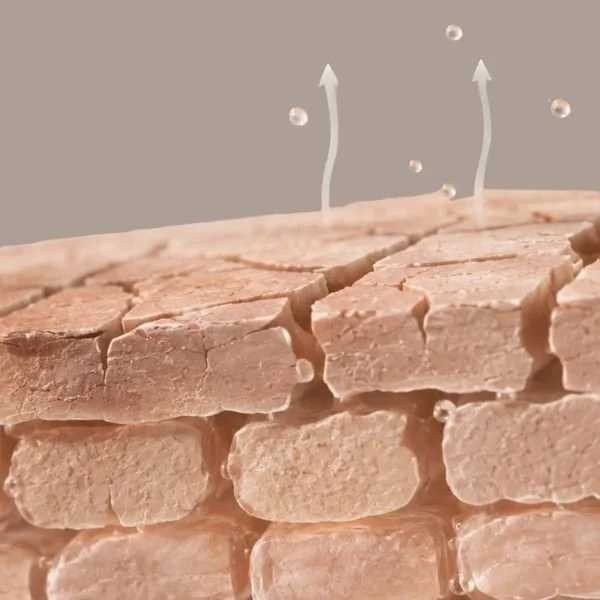
The skin cells are the bricks, while the lipids surrounding them act as the mortar. These lipids include ceramides, cholesterol and free fatty acids, which help retain water and protect against external irritants.
Hormonal changes during menopause can influence the skin's lipid composition and barrier function.
It's not just how much ceramide the skin contains. The different types, their chain lengths and how they're organised within the barrier also matter. Research has investigated changes in ceramide composition in postmenopausal skin because these characteristics influence how effectively the barrier retains moisture.
We all experience transepidermal water loss (TEWL), the natural movement of water through the skin into the environment. But when the barrier isn't functioning optimally, water loss can increase, contributing to dryness and discomfort.
This doesn't mean everyone going through menopause has a damaged skin barrier!
Signs to look out for include:
Tightness after cleansing.
Increased dryness or flaking.
Stinging when applying skincare.
Redness or irritation.
Products you previously tolerated suddenly feeling uncomfortable.
4. Increased Sensitivity and Redness
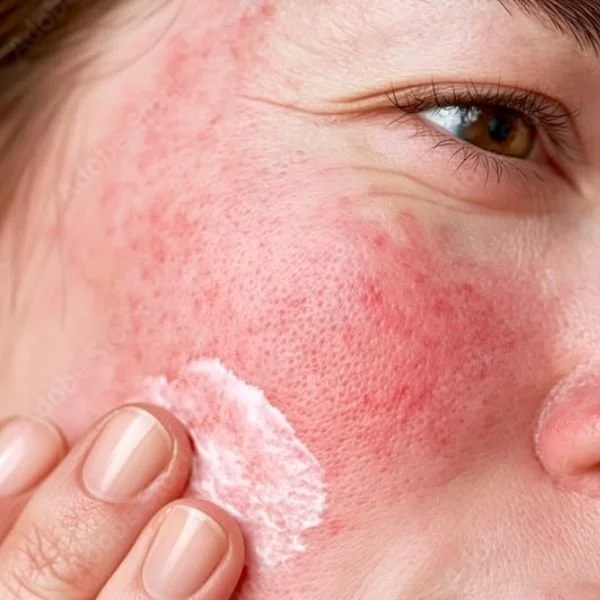
One of the most frustrating changes during perimenopause can be increased skin reactivity. Products you've used happily for years may suddenly cause stinging or discomfort.
Changes in hydration and barrier function can make skin more vulnerable to irritation.
Hot flushes can also cause temporary facial warmth and flushing. This can be particularly challenging if you have rosacea, as heat is a common trigger.
But persistent redness shouldn't automatically be blamed on menopause. Rosacea, contact dermatitis and other skin conditions can produce similar symptoms.
5. Hormonal Breakouts and Changes in Oil Production
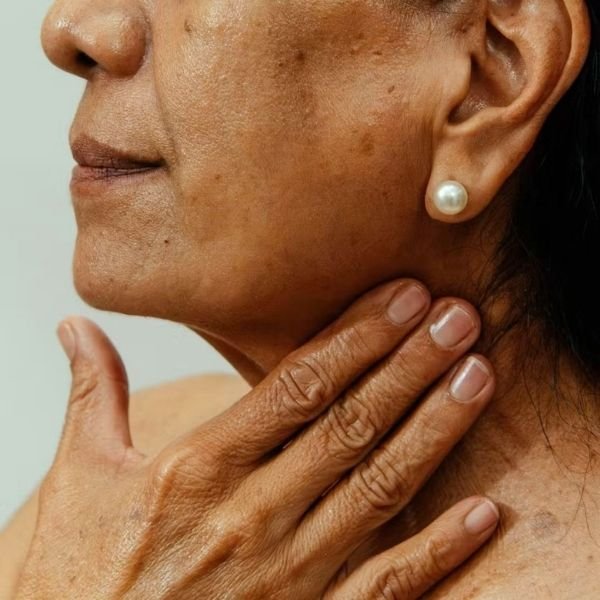
Menopause doesn't always mean your skin becomes dry! Some women experience increased oiliness, congestion or breakouts, particularly during perimenopause.
As oestrogen fluctuates and declines, its balance with androgens changes. Androgens influence sebaceous gland activity and sebum production, which can contribute to breakouts in some women.
You may notice spots around your chin, jawline or lower face, even if you haven't experienced acne for years.
And remember, breakout-prone skin can also be dry, dehydrated or sensitive.
6. Hyperpigmentation and Uneven Skin Tone
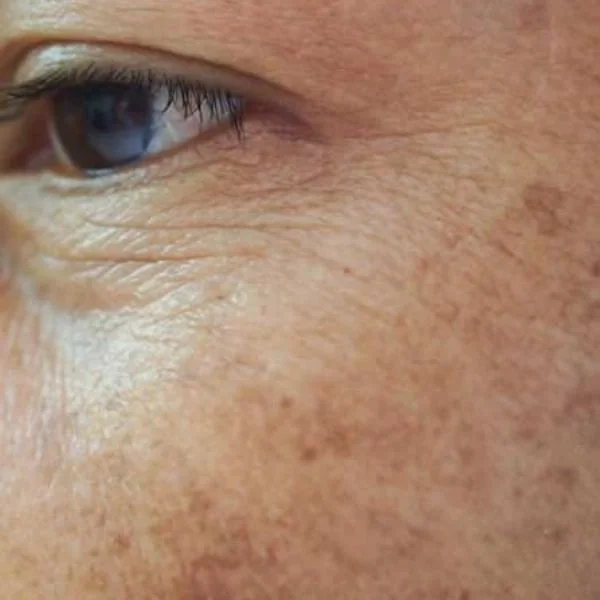
You may notice pigmentation becoming more visible during perimenopause and menopause.
Oestrogen can influence melanocytes, the cells responsible for producing melanin, which gives our skin its colour.
But hyperpigmentation is complex, involving several biological pathways. Cumulative UV exposure, inflammation, genetics and hormonal changes can all contribute.
Please don't assume every dark patch appearing during perimenopause or menopause is hormonal pigmentation. Melasma, sunspots and post-inflammatory hyperpigmentation have different underlying causes, and understanding the difference matters.
7. Dullness and Changes in Skin Texture
Your skin may feel rougher, look less smooth or simply not have the same glow.
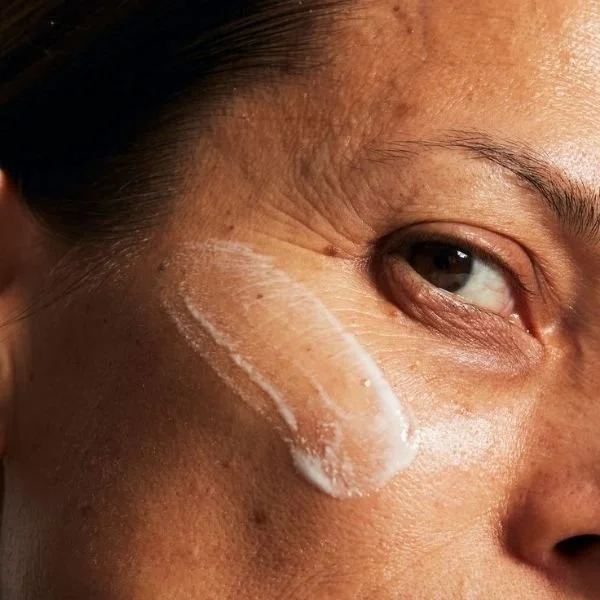
Oestrogen helps regulate the activity of keratinocytes, the cells responsible for renewing our epidermis. As oestrogen declines, changes in cell proliferation and epidermal renewal can contribute to a rougher, less even skin surface.
Normally, new skin cells are produced in the deeper layers of the epidermis, gradually move towards the surface and are eventually shed. When this process becomes less efficient, the skin's surface can appear less smooth.
Declining oestrogen can also affect skin hydration and barrier function. When the outermost skin cells become dehydrated, the surface can look less smooth, causing light to scatter rather than reflect evenly.
And that's why dull skin doesn't automatically mean you need more exfoliation!
Sometimes the problem isn't the rate at which skin cells are shedding. It's that your skin needs more hydration and barrier support.
8. Thinner, More Fragile Skin
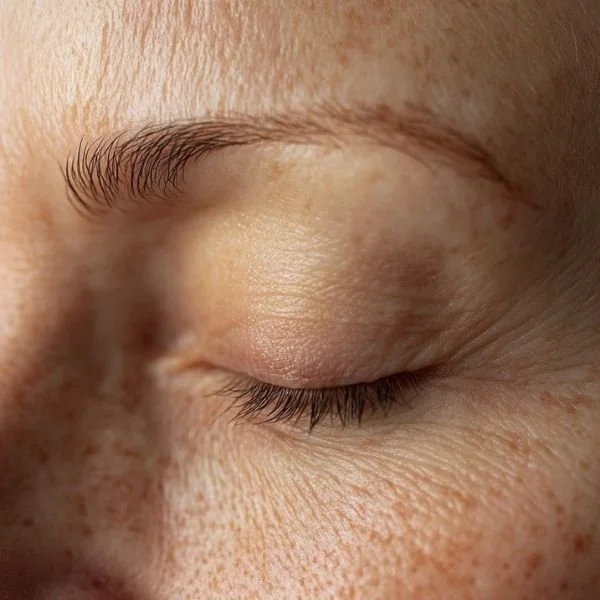
As oestrogen declines, changes in dermal collagen and skin thickness can make the skin less resilient.
The dermis provides much of our skin's structural support, so changes in collagen content and thickness can leave skin feeling more delicate and vulnerable to mechanical stress.
You may notice your skin feels more fragile and takes longer to recover from irritation.
Skin repair and wound healing can also slow with age, with hormonal changes potentially contributing.
Is It Menopause or Just Skin Ageing?
As we age, our skin naturally undergoes changes in collagen production, elasticity, epidermal renewal and hydration. Years of UV exposure can also contribute to collagen breakdown, pigmentation and changes in skin texture.
Declining oestrogen can influence many of these same processes, potentially accelerating certain changes, particularly those involving collagen and skin thickness.
So it's not always possible to separate what is happening because of menopause from what is happening as part of the natural ageing process.
Changes in facial contours aren't simply caused by declining collagen. The deeper structures of our face, including fat compartments and bone, also change with age.
What Can Skincare Actually Change?
There are some brilliant skincare ingredients and formulations that can help support our skin through perimenopause, menopause and postmenopause.
Skincare can improve hydration, support the skin barrier, address uneven pigmentation and texture, and help improve the appearance of fine lines.
Certain ingredients, particularly retinoids, also have evidence supporting their ability to influence collagen production and improve signs of photoageing.
But skincare cannot replace lost facial fat, restore changes in bone structure or reverse every biological effect of declining oestrogen.
And I think it's important we understand that distinction, particularly when brands make some very ambitious claims about menopause skincare!
My Advice
My advice is to start by identifying which of these skin changes you're actually experiencing.
And if you've noticed your skin becoming more fragile, sensitive or reactive, this is where I would start.
Supporting your skin barrier and improving skin comfort should always take priority before trying to address other concerns, such as pigmentation, fine lines or breakouts.
Because there's very little point in introducing powerful active ingredients if your skin is already struggling to tolerate your existing routine!
Once your skin feels comfortable and your barrier is functioning well, you can start addressing your other skin concerns.
And in my next Skin School blog, coming soon, I'll be sharing exactly how to adapt your skincare routine during perimenopause and menopause, which ingredients are worth investing in and whether you really need products specifically designed for menopause.
Because you don't need to replace your entire skincare routine just because your hormones are changing!
Don't shop for your age or your hormones. Shop for your skin conditions!
Thank You For Reading
I hope you have enjoyed this blog, please let me know if you need any help with your skin.
Stay tuned for more blogs and follow me on social media for the latest launches and more Skin School blogs!
Bye for now,
Fiona x
Links may be affiliated links which means that if you make a purchase though one of our links we receive a small commission which helps support and run this website.